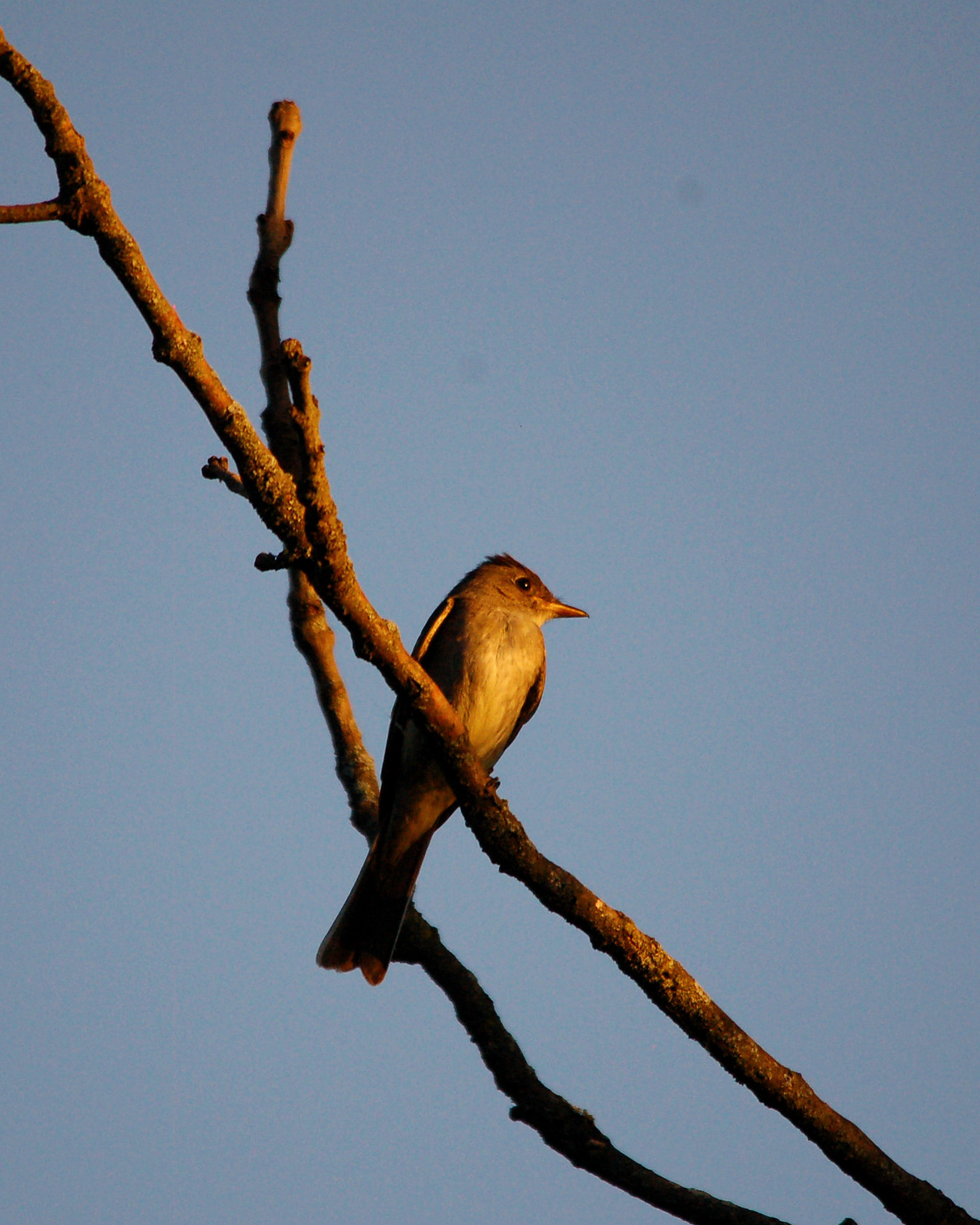
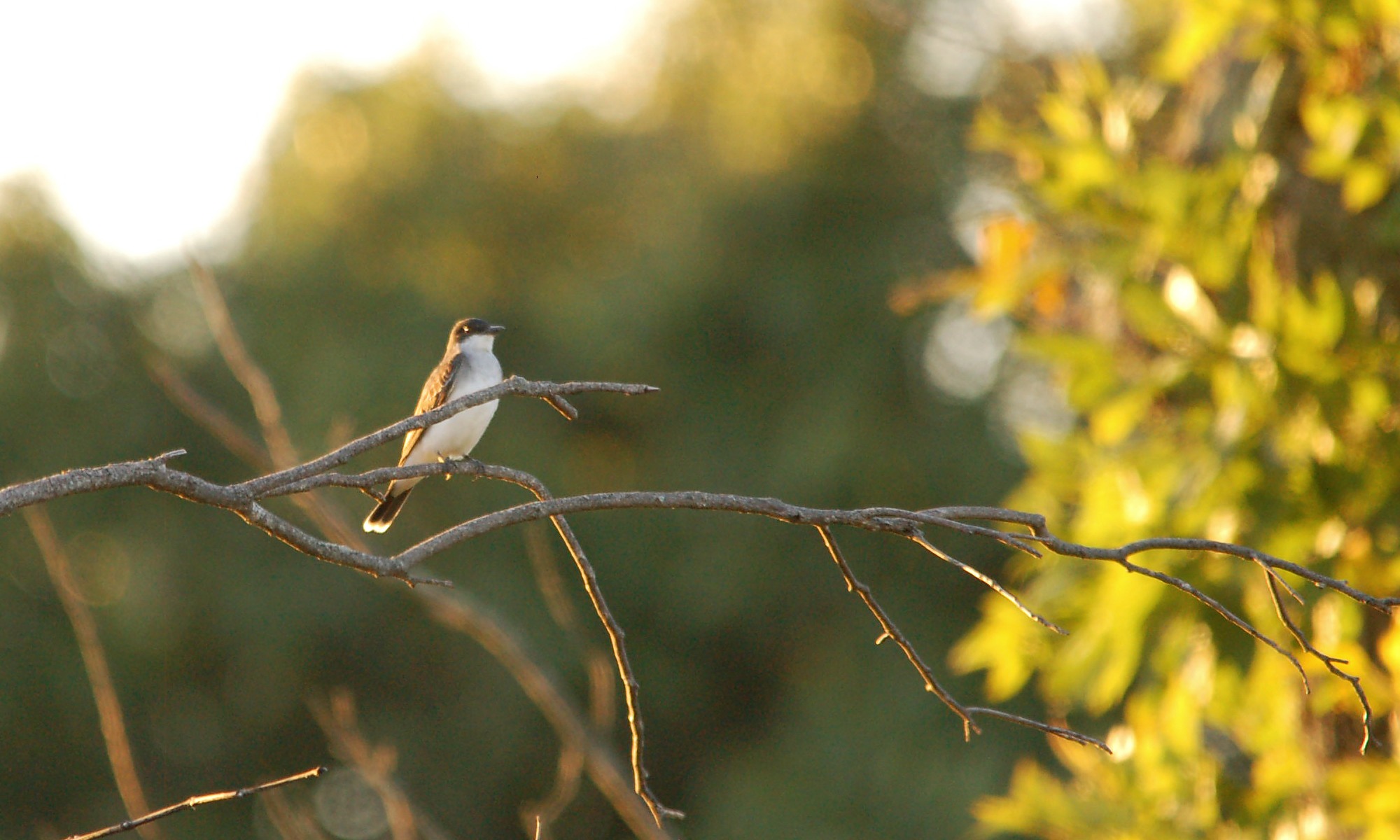
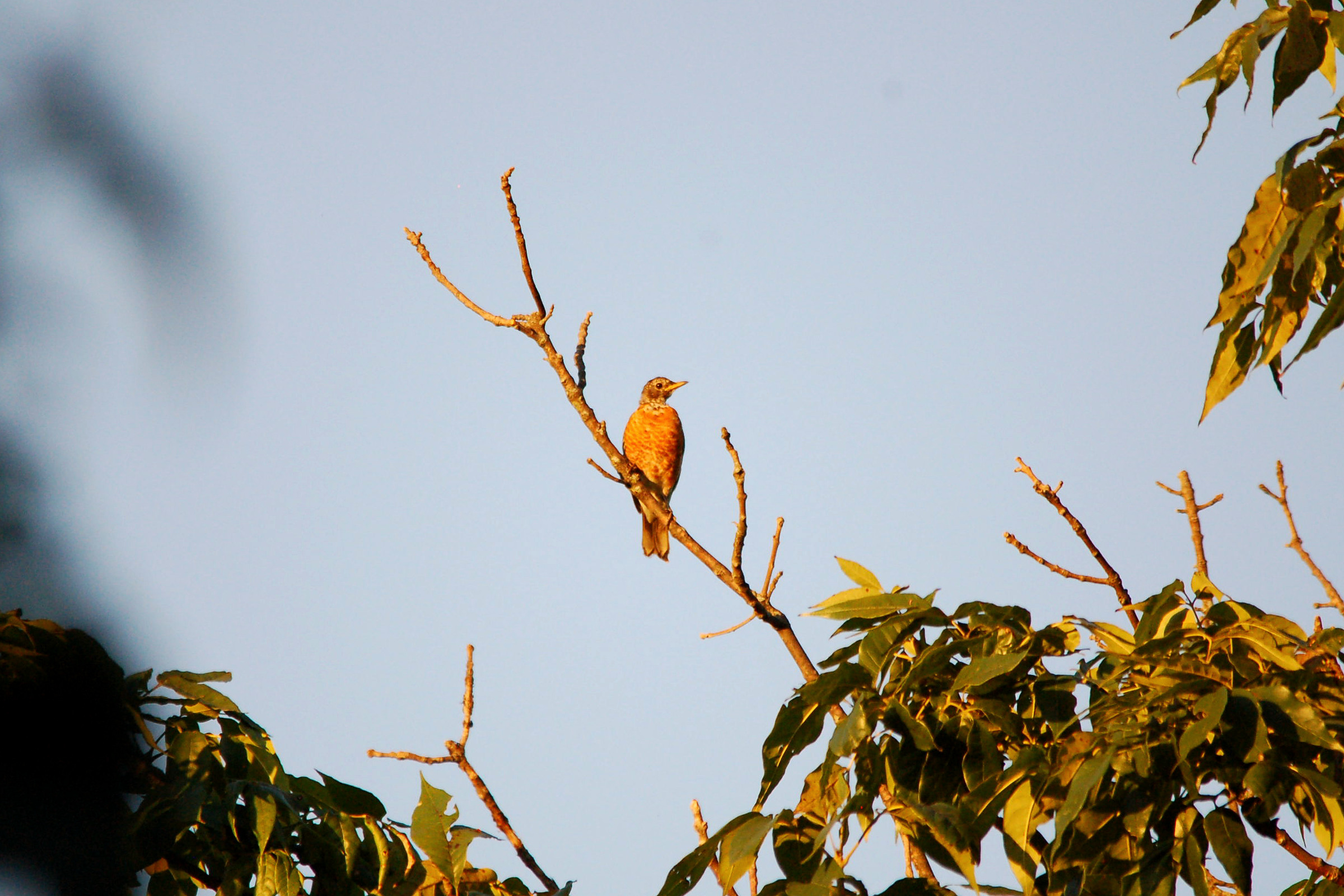
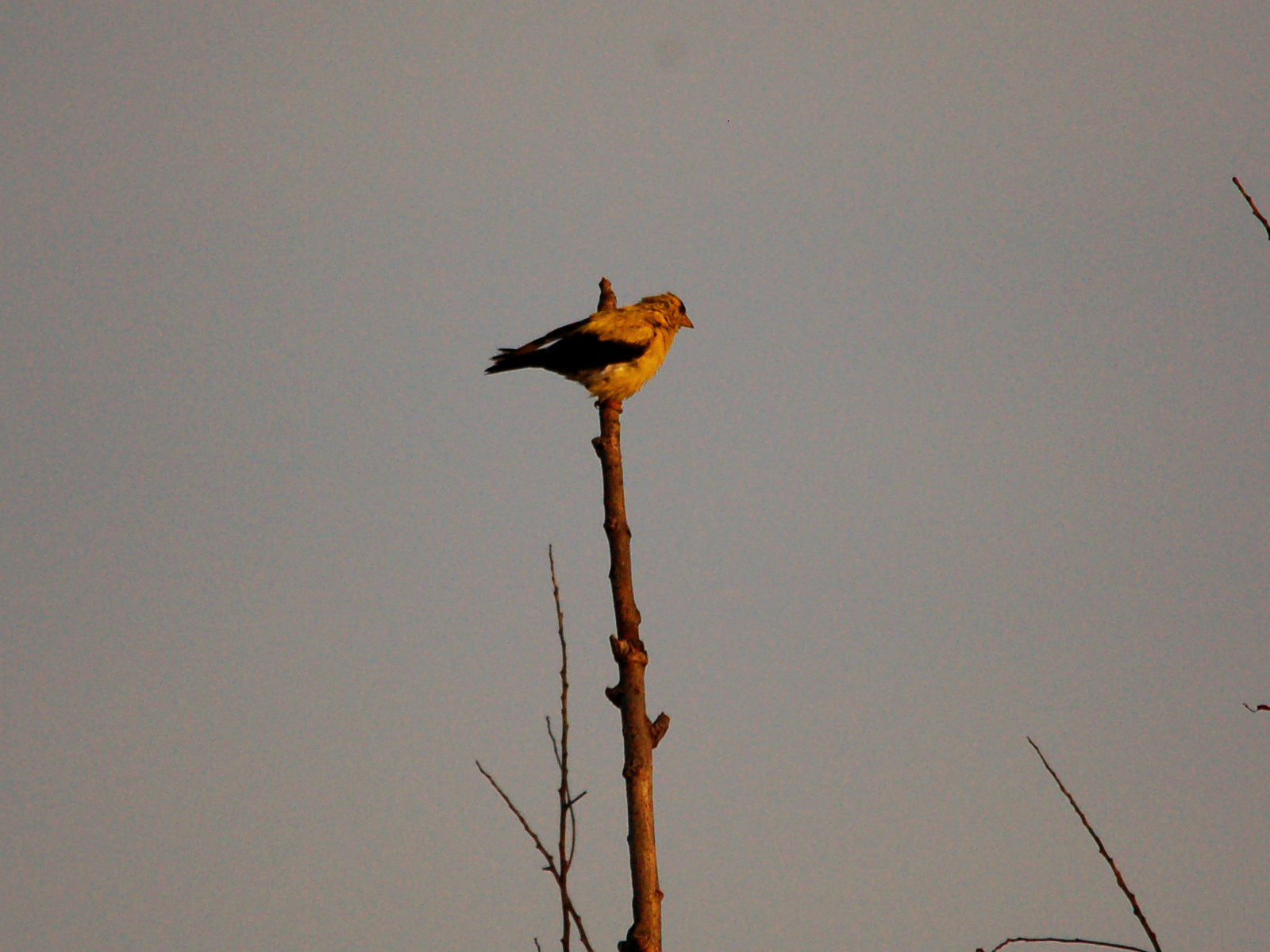
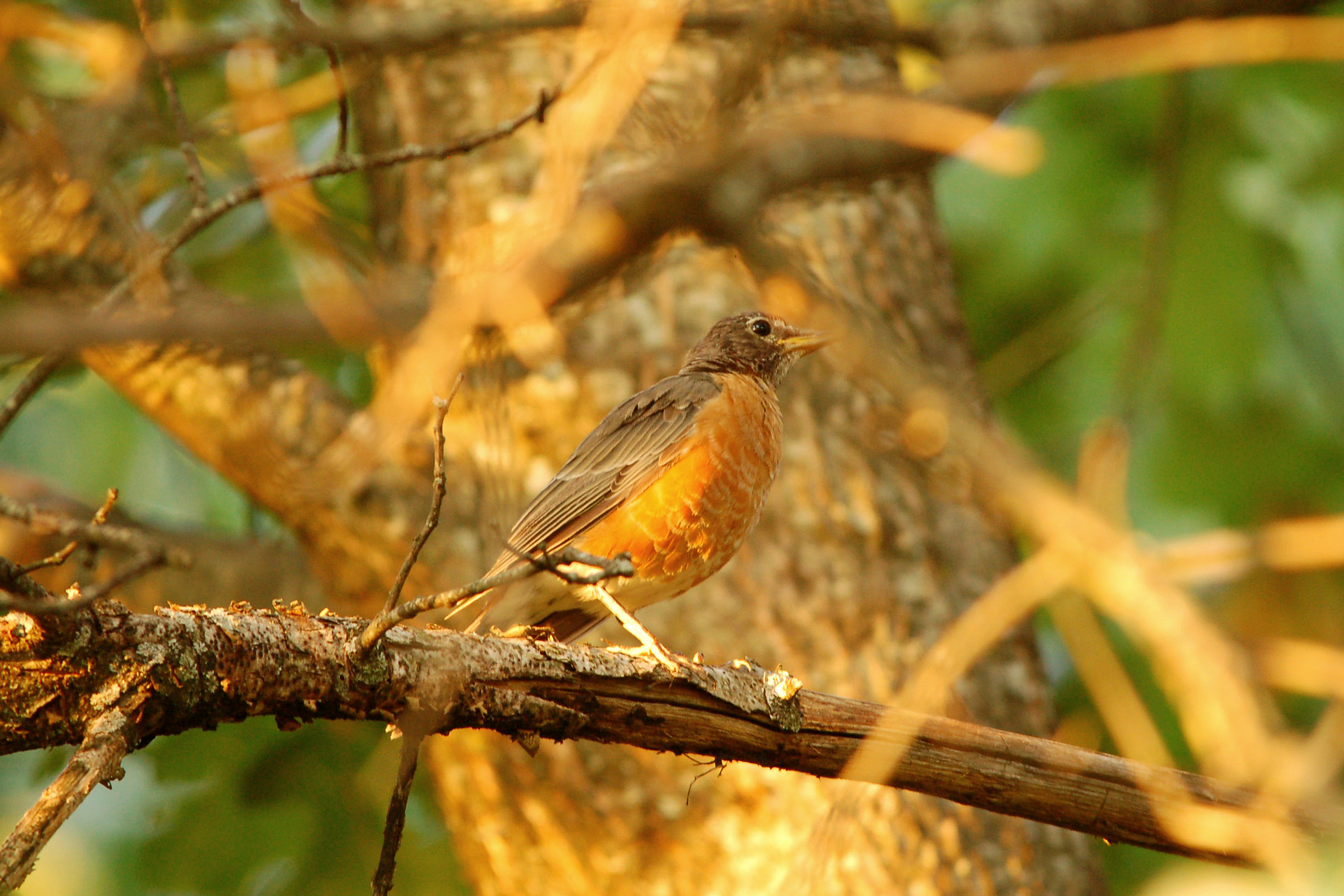
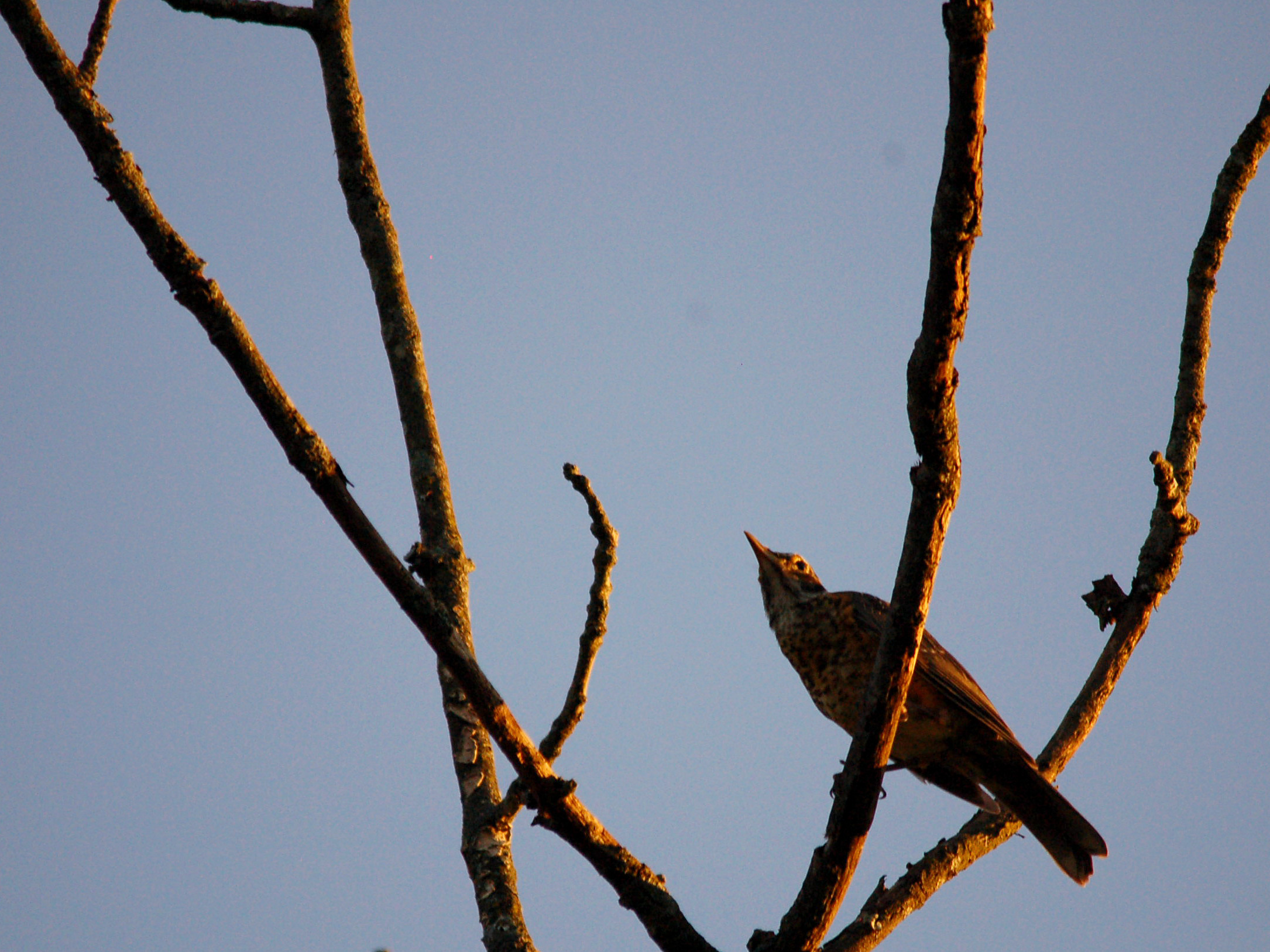
American robin in warm evening light among layered woodland branches

A first season in the field

Among
Branches

Bird photographs shaped by patience, long glass, and the last warm light of day.

View the edit

American Robin · Woodland Robin · DSC_0138 · 500mm · f/6.3 · 1/20 · ISO 800

The edit · 01

Nine frames from 181 RAW photographs.

Summit Field · Iroquois Park · Louisville, Kentucky

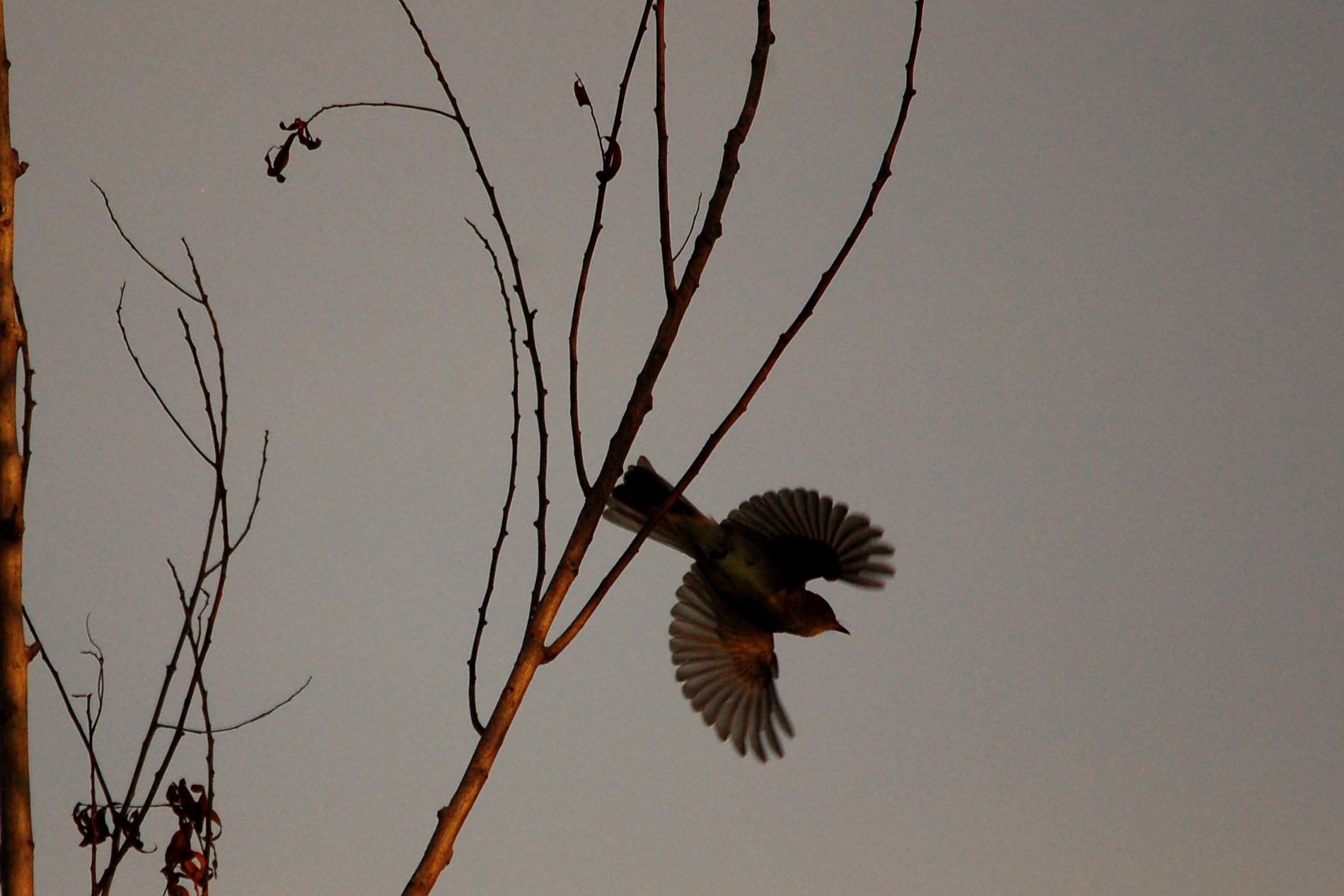
The strongest images favor gesture and atmosphere over simple documentation. Warm side light, repeating branches, and moments of behavior give this first collection its visual voice.

Field identification · 02

Five species around Summit Field.

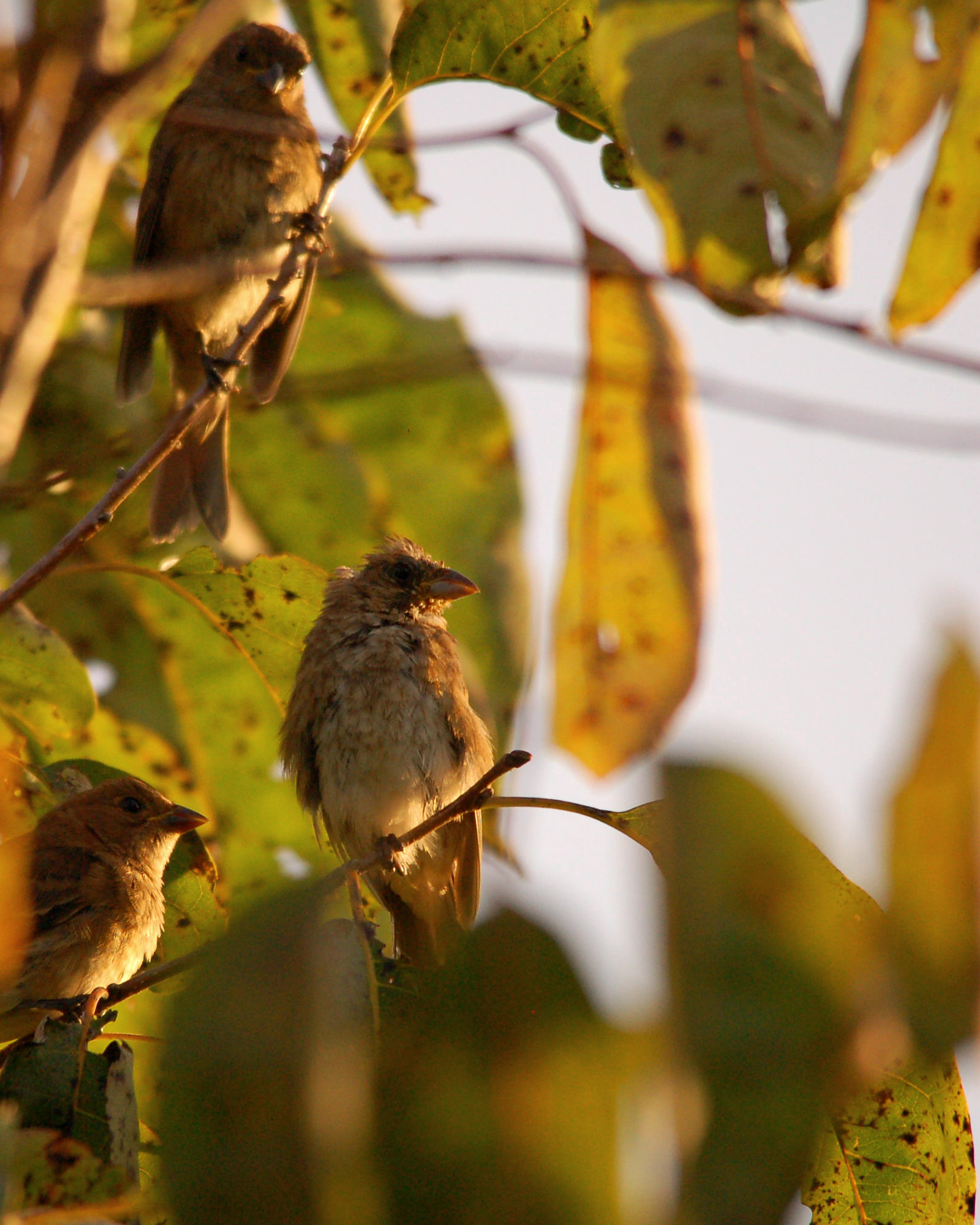
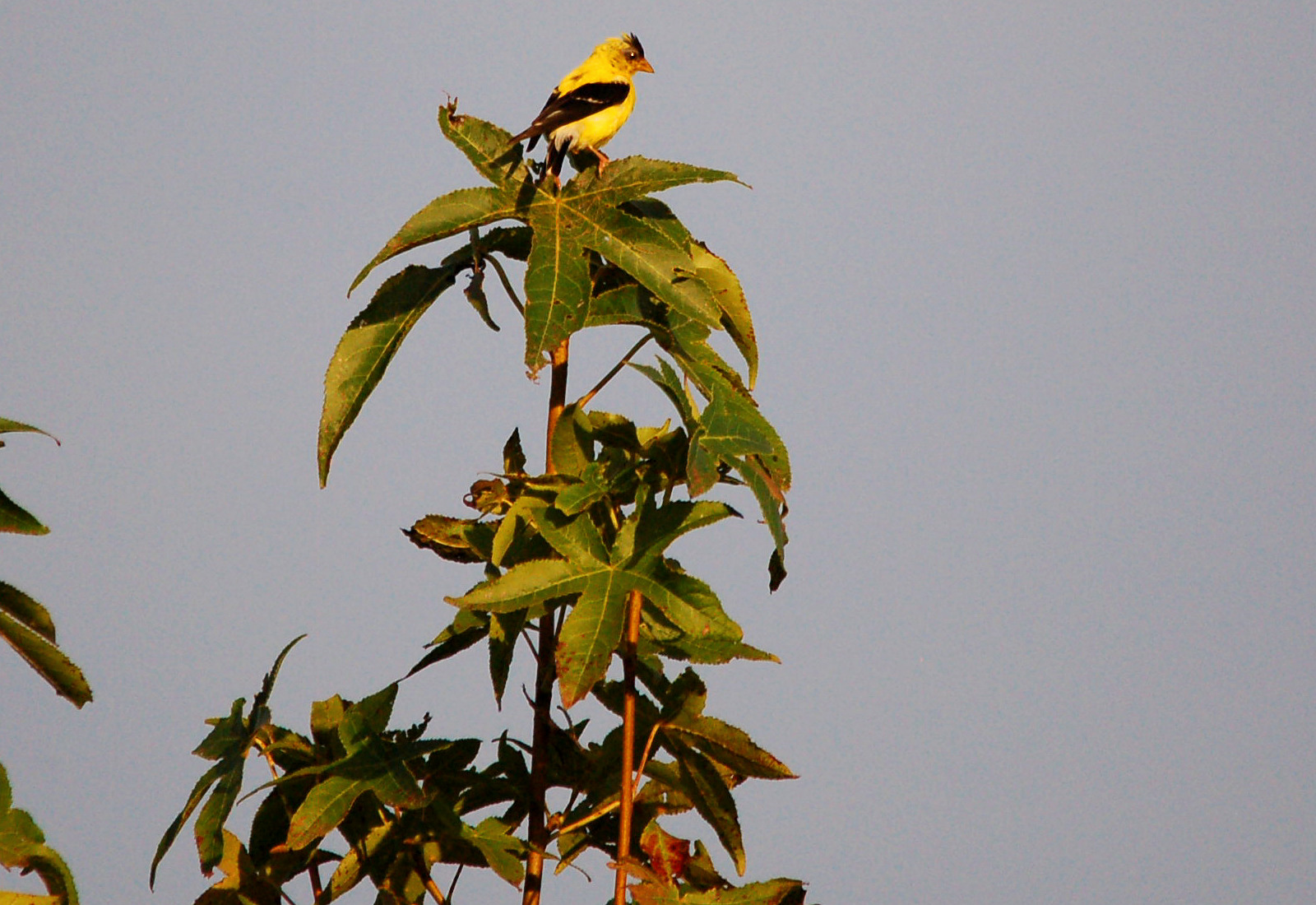
These IDs combine visible field marks with the open meadow and wooded-edge habitat around Summit Field. Links open the corresponding eBird species accounts. They are working identifications rather than formal records; the House Finch group is marked probable because foliage obscures some diagnostic detail.

On the lookout · 03

Nine birds worth waiting for.

A working target list for Summit Field, shaped by its open grass, brushy margin, and mature forest. Iroquois Park birders have already documented a strong sparrow mix in the summit prairie, so this is a realistic watch list—not a promise of what will appear on any one visit.

Field route Seed heads → exposed perches → woodland edge

Probability is seasonal and habitat-based. Local grounding: a Beckham Bird Club outing recorded Field, Chipping, Swamp, Song, and White-throated Sparrows in the prairie at the top of Iroquois Park.

Field advice · 04

A sharper plan for the next session.

Recommended baseline

ISO 800 was a sound compromise in this collection. Seven selected frames reached 1/750 or faster; the 1/180 kingbird and 1/20 woodland portrait show how slower shutters trade fine detail for atmosphere.

Perched birds
S mode · 1/1000 · ISO 800
Action & takeoff
1/2000–1/3000 · ISO 800–1600
Strong daylight
ISO 400 · try f/8
01

Choose shutter first

Aperture priority at f/6.3 allowed one exposure to fall to 1/20. Shutter priority is safer on the D50: start at 1/1000 for a perch and move to 1/2000–1/3000 when behavior begins.

02

Spend ISO on sharpness

Use ISO 400 only when the light still gives you enough speed. ISO 800 is a useful default, and ISO 1600 is preferable to motion blur when the light drops. Expose cleanly rather than brightening a dark RAW file heavily.

03

Put focus on the eye

For a still bird, use AF-S with a manually selected single area. For movement, use AF-C with Dynamic Area AF. Keep the chosen point on the nearest eye and make short, controlled bursts.

04

Use stabilization deliberately

Use OS Mode 1 for ordinary handheld work and Mode 2 only for deliberate panning. Give stabilization a moment to settle after the half-press; switch it off when the lens is locked on a rigid tripod.

05

Watch the sky

Matrix metering at zero compensation protected these skies, but sometimes left the bird dark. Try +1/3 to +2/3 EV for a sky-backed subject, checking the highlight warning and raising ISO if needed to preserve shutter speed.

06

Use good light twice

When sunlight gives you 1/3000 on a perched bird, trade some excess speed for ISO 400 or f/8. Move closer within an ethical distance, clear the face of crossing branches, and wait for the head turn or takeoff.
Darkroom note · 05

Every final image was rebuilt from the original Nikon RAW file. Processing is limited to crop, global exposure and color balance, gentle contrast, resizing, and sharpening. Nothing was added, removed, or generatively altered.